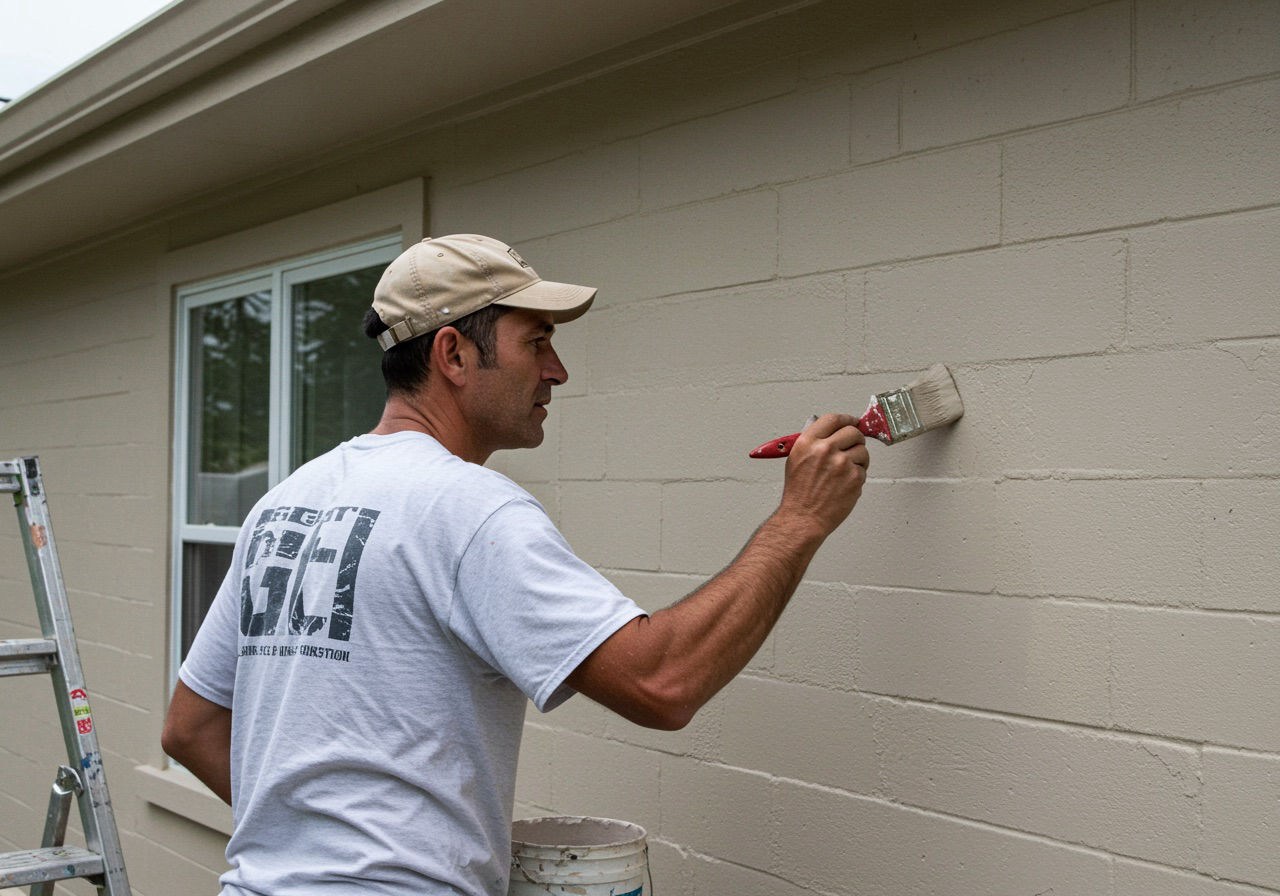
Masonry has retained its historic importance as a strong and durable construction method, and its good architectural nature has ensured its use till today. The properties of masonry depend on the materials' properties, the bonding system, and the units' characteristics in various manufacturing systems. In the present construction market, we have several masonry materials available and suitable for different conditions. The units used for masonry buildings can be of burnt clay, stone, concrete, or concrete blocks.
The materials selected for these units should be durable and strong and can provide the necessary pressure-resisting qualities for the wall system. Masonry units are the building blocks of masonry construction. These units can be dressed or rough-finished stones, bricks, concrete blocks, or structural clay tiles. Masonry units can be subdivided into non-load-bearing masonry units and load-bearing masonry units. The non-load bearing masonry units cannot be used in bearing or non-bearing walls, such as hollow clay tiles, cement, lightweight blocks, or blocks filled with foam or any other material that causes an empty or hollow area in the construction.
Site preparation and layout are recommended for masonry to ensure proper construction according to design, dimensions, and tolerances. It is the developer's responsibility to ensure that the masonry walls are constructed according to the design and standards of the work. The granites, the parent materials, should be crushed or broken down to three inches or less in size or the maximum size recommended by the manufacturer. The material should be graded from the screenings, which can have up to 100 per cent of the maximum size of materials. Clean water shall be sprinkled onto the screenings to obtain the desired moisture content, which will be maintained during the compaction, confirming the standard maximum dry density and optimum moisture content of the tests.
When more than four feet of unsuitable material is encountered during the fill construction, the existing foundation and fill should be replaced with the required replacement fill material. Crushed or broken granite will replace existing granite, which requires both B and C granular properties. All rock materials shall contain 90 per cent to 100 per cent crushed faces and a minimum equivalent percentage of two fractured faces. All screened materials shall be between a one-inch nominal size and a half-inch nominal size. Fine aggregate granular materials such as screenings for granular A shall not be performed and should be mixed with the granular A before spreading. For the construction of the drainage blanket, open-graded granular.
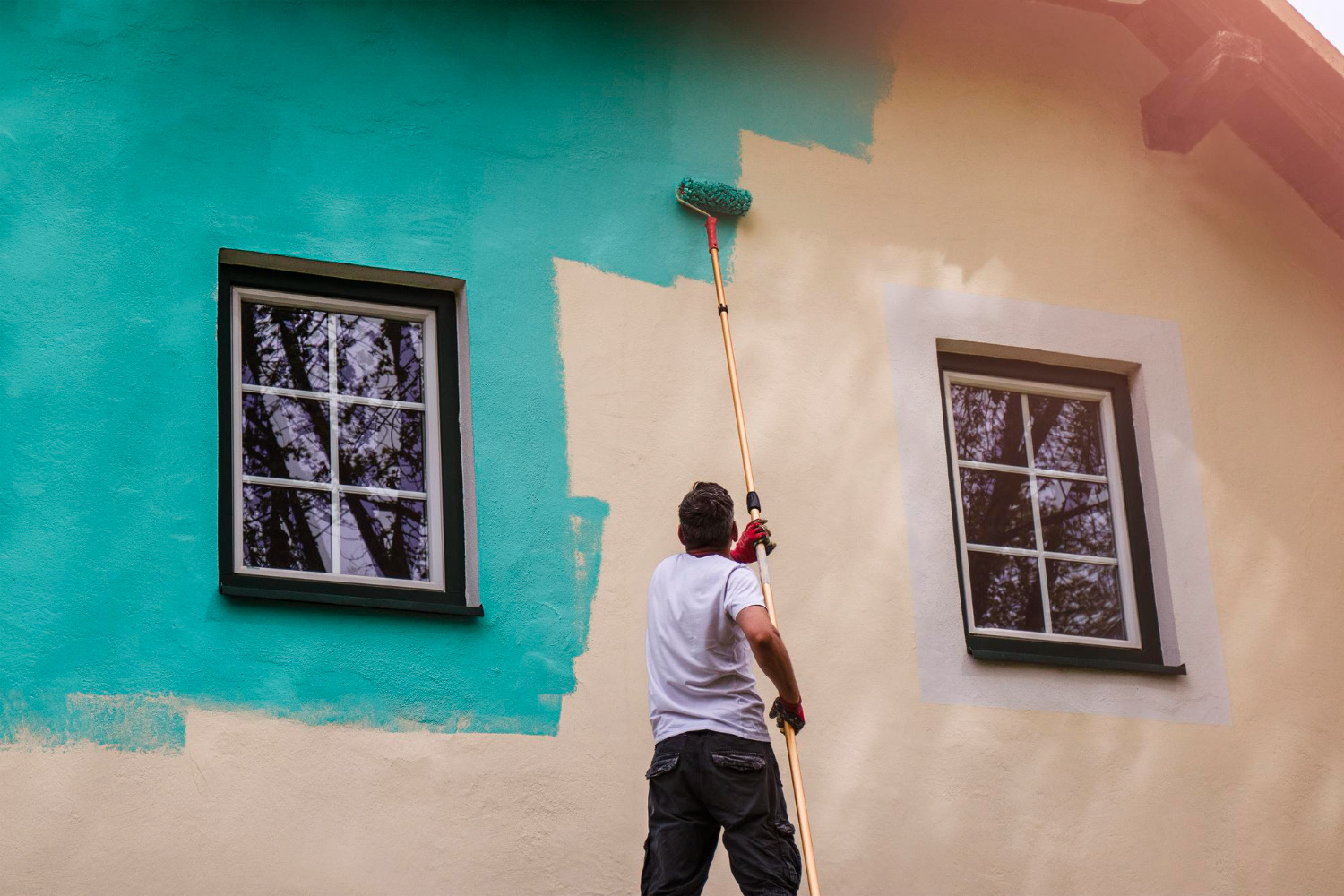
Stack bond is the most straightforward bond used in practice. The bricks are uniformly laid on each other, set in at either one of the sides and are allowed to span over their supports. There is no overlapping between the bricks. Due to this, it becomes necessary to provide orthogonal supports such as those offered by partition walls and reinforced concrete and wooden tie beams. In walls with a uniform thickness, buckling is prevented with the help of an internal wall, i.e., an orthogonal support wall. If the walls do not have a uniform thickness, a toothed profile is created, and the edges can be left protruding if the joints are wide. Regarding the structural behaviour, the stack bond has the lowest mechanical strength compared to other types of bonds, as all the bonded masonry's mechanical properties depend on the bond's sole friction.
Lastly, it is possible to overturn the horizontal forces acting over the edges.
This bond has a more intuitive mechanical behaviour for the external loads than the other types of bonds, and, for this reason, among others, it is still commonly used during some phases of the setting up of vault works wherein the masonry is laid radially. However, it also has some negative aspects, including the fact that no concrete reinforcement can be used on the tensionless side: on the one hand, internal partitions must be assembled and, on the other hand, if either a staircase or a lift must be set up in the construction, so much space will be lost over time.
This is the most straightforward arrangement for a masonry wall in which all the bricks are laid as headers. When a wall must be built at a long, continuous length without bonding bricks, i.e., when no bricks are used as stretchers, it is known as a running bond wall. The primary defect of a running bond wall is its weak bond, i.e., it does not bind bricks together. Hence, only low walls such as compound walls, garden walls, and fences can be built with running bond. In construction, such long and continuous walls require binding based on bond properties; hence, half-brick pillars are incorporated.
Guidelines to Construct Running Bond Wall:
1. Use double lipping along edges at intervals within the wall.
2. Break double-lipping length at regular intervals by incorporating header joints.
3. Connect these double-lipped outer rows horizontally with vertical bricks at different levels and stages.
It should be noted that such an arrangement provides only a minimum bond, hence, the running bond wall is not strong.
This bond may be considered a modification of the Flemish bond in which all the stretchers have their headers attached. The stretcher is a brick in which both the small sides as well as the length and thickness. The sides of the stretcher are the top and bottom of the wall. In English bond, the bricks are laid alternately as stretchers and headers such that the face of every header is centred with the front face of the perpendicular. The stretchers are arranged so that a line in their centre will align with the centre of the entire stretchers in the adjacent courses. When a line of headers is provided, the stretcher on one course is in line with the central portion of the interspace of the lower face of those bricks in the course containing headers.
When comparing these two bonds, the strength of the English bond is less than that of the masonry wall with the Flemish bond. In the English bond, when bricks with headers are laid in the wall, taking the row of bricks with headers as an entire row and laying brick with stretchers, you need to cut the header brick in half so that the stretchers can be anchored to the wall. The next row will have the help of the correctly angled cuts to ensure they line up correctly with the last row's bricks.
Contact us if you want your home or business masonry painting by calling
07762 105 340
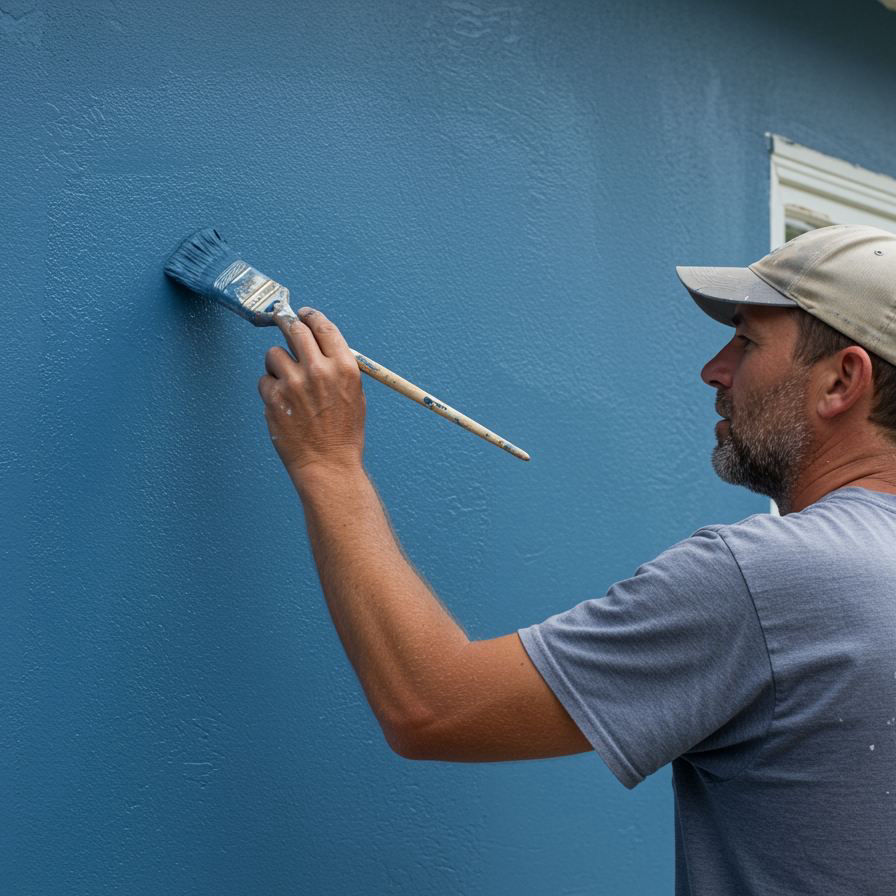
Masonry wall construction using brick or concrete masonry units has been a predominant system for ages. Masonry provides colour, texture, scale, pattern, rhythm, and a sense of permanence, as well as scale relations and compatibility to the new buildings. The masonry structure's strength, water-tightness, durability, and appearance help maintain its good effect and improve over time.
Mortar plays a significant role in masonry. Mortar bonds masonry units, transfers stress from the structure to the unit, absorbs stresses induced by temperature changes, and acts as a bearing medium. Its chemical composition, internal and external weathering properties, physical characteristics, colour, consistency, and other factors must possess the necessary attributes to perform its role well. Mixing modified mortar has been practised for several centuries, with the mortar ratios being varied to suit the composition of the stone and the requirements of the particular structure. Many of the earlier structures where it was applied had been well designed concerning the type of mortar, depending on the nature, composition, appearance, and expected performance of the individual stones embedded in the masonry.
Looking to enhance your home or commercial property's appearance? Contact our expert team today for professional painting services tailored to your needs.
Call us on 07762 105 340
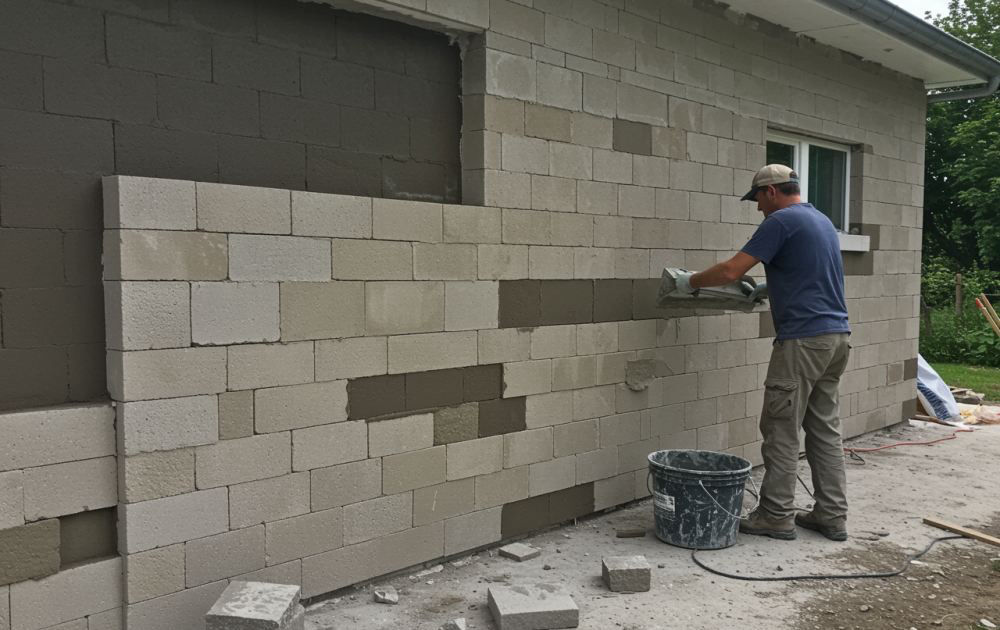
Masonry wall construction using brick or concrete masonry units has been a predominant system for ages. Masonry provides colour, texture, scale, pattern, rhythm, and a sense of permanence, as well as scale relations and compatibility to the new buildings. The masonry structure's strength, water-tightness, durability, and appearance help maintain its good effect and improve over time.
Tests and checks on the masonry materials are discussed. The following are the foremost quality checks carried out by testing the masonry materials such as cement, sand, brick, and mortar.
The quality of the cement can be checked by its colour and physical appearance. When a small quantity of cement is rubbed between the fingers, it should feel smooth and cool. If cement passes these tests, it is considered good.
Sand should be tested for various properties and free of other impurities and organic matter. Some of the properties are the presence of clay and wet silt.
Bricks' quality:
• Hard bricks give a clear ringing sound when struck with one another.
• Bricks give a good scratch to the matchstick.
• A good brick gives a smooth surface.
Mortar quality: The quality of the mortar can be checked by examining its physical appearance. The mixed mortar should feel smooth when rubbed between the fingers. Masonry should not be laid with old or dried-out mortar. The mortar should be able to grip the trowel and retain a slight droop shape. The following are the various quality checks for the mortar:
Colour check: The fine-looking mortar should match the standard shade number. This test is beneficial for checking the quality of the mortar.
Shape or consistency: When taken from the mix, the sample should retain its sausage shape without bulging for a few minutes on the brick trowel. It should neither be dry nor too wet after being slumped.
Absorption: Absorption tells the amount of water given to the mix. The quality of the masonry construction can be known by checking the quality of the material. Since masonry is laid down with a mixture of water containing cement, the water should be pure and clean of impurities. There should be no chlorine impurities in it for the construction of water tanks, as chlorine content will increase the setting time of the cement, which results in the formation of hard lumps and, ultimately, it is challenging to achieve waterproof concrete. Therefore, constructing masonry water tanks requires a unique and proper choice of materials for the masonry construction.