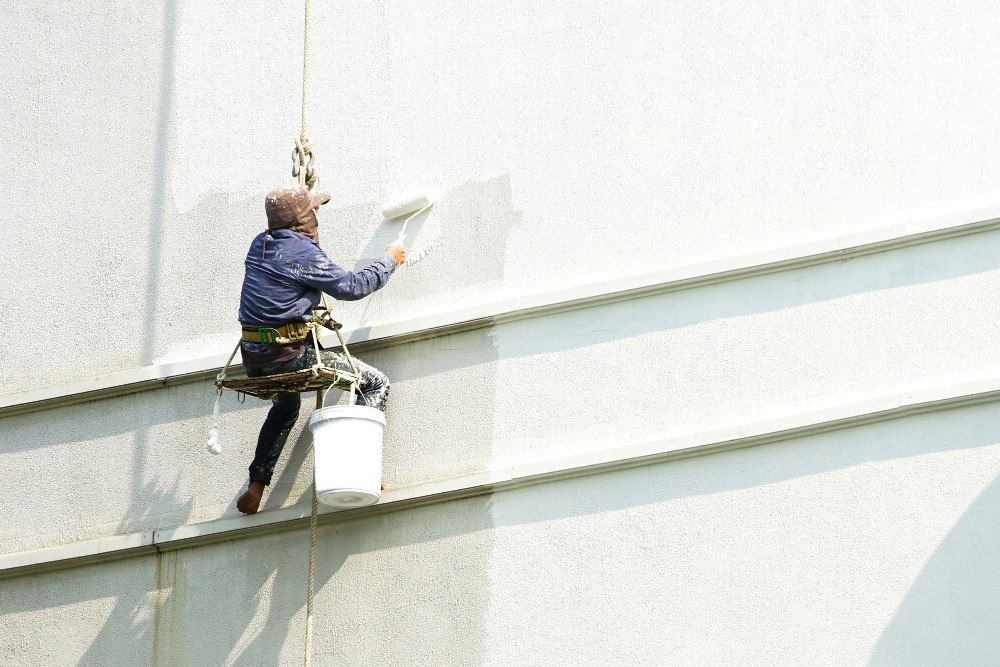
When applied as part of a render-only finish, masonry paint is traditionally thought of as a finish for the cheapest of new builds or for lower value repair and maintenance jobs. Where impression is important, the finish is either left natural or decorated with mineral silicate paint systems. Despite these perceptions, rendering and masonry painting are an extremely important part of the construction sector, with an estimated 59 million square meters of masonry repainted annually. Expenditure on maintenance and repair of buildings provides work for a variety of occupations, the gainful employment of several hundred thousand construction trades workers, and the masonry repair and maintenance sector has been particularly resistant to significant downturns in workload in both overall construction and during difficult economic times.
Contact us on 07762 105 340
The role that colour can play in hiding imperfections within the structure to be surfaced is recognised by artists. Today's tradesman uses masonry finishes in the same way within the construction sector. The availability of many off-the-shelf multi-coloured specialist coatings in differing sizes exerts significant price pressure on a traditional trade that has witnessed very little movement in productivity. The perception of the performance of today's affordable domestic coatings, some with very limited performance levels, is lessened with the benefit of few suitable scientific criteria with which to judge the differences offered by varying painting methods.
Masonry painters in the UK
Weather in the UK is dramatic, often windy, and the source of sudden temperature changes, with rain being the most common form of precipitation. A house in the UK is painted to protect the external walls on the first floor and above from decay due to the action of rain, frost, and pollution; low down, walls are instead damaged by splashing from heavy rain, dirt spread by pets or vermin, and gardening or building operations. Many houses in the towns and countryside have been built of solid masonry walls. The properties of these masonry walls are a function, and they change with the composition and history of the masonry and the microclimate of their location.
The masonry walls are complex, often hand-crafted, three-dimensional structures made of locally sourced typically weathered, and relatively permeable building materials, such as stone, lime, and terracotta. If built using traditional skills and materials, such masonry is durable, as demonstrated by many structures that have survived for thousands of years. Typically, these masonry houses have been painted, traditionally with limewash or distemper, and after oil-based paint in the 19th century, with emulsion, oil, and later water-based paints.
Contact us on 07762 105 340